Showing posts with label Children. Show all posts

Sunday, December 4, 2011

Children’s Emotions Stabilized by Simple Dietary Changes

Happy scream

By Mary Lynch, Kindergarten Teacher

I am writing to share with you a few of the amazing changes we have seen in our family since we started changing our diets and learning the truth about what is and is not healthy.

We made little changes at first; adding coconut oil, fermented cod liver oil, and raw milk and butter to our diets.  Within a week and after many hours of research, we decided to eliminate refined sugar and processed foods and to reduce grain consumption as well.

We noticed immediate and dramatic changes in our daughters’ mood and behavior!

My eldest has always struggled with fear and anxiety issues.  For years we have worked with prayer and behavior modification and we have certainly seen improvement.  But one week into our diet changes we saw the largest jump in confidence that we have ever seen.  All of a sudden, she approaches challenges calmly and logically, rather than immediately shutting down or freaking out.  She has attempted – and enjoyed – activities she would not even consider in the past.  She is embracing life rather than hiding from it!

My youngest daughter is not afraid of anything.  We call her our “adventure girl.”  However, this passion for life sometimes leads to what I like to call an “excess of emotion.”  She’s nine years-old and was having all-out temper tantrums at least once a month.  Small discouragements became huge problems.  Her emotions were controlling her, rather than her controlling her emotions.  Sarah, as soon as we changed our diet she became a calm, content child.  She now takes disappointments in stride and can control her emotions, actions and words easily.  Yes, she cries sometimes.  But she no longer screams and throws things while she does it.  She even noticed right away, saying, “If I don’t want to be angry I can just take a deep breath!”  She even surprised herself!

It was my husband who noticed the change first.  He came home from work at 5:30, as usual, but was not met with the usual homecoming chaos.  He expected me to be stressed about preparing dinner, tidying the dining room and overseeing homework.  He expected the girls to be whining about homework and dinner and chores.  (I’m embarrassed to admit this was typical at our house.)  Instead, he found silence.  We were still getting things done – cooking and chores and homework – but instead of coming into an atmosphere of tension, he came home to a house filled with peace.

Thank you, Sarah, for your passion for healthful eating and for sharing what you have learned on your blog.  I just had to let you know how it has changed not just our diets, but our attitudes and relationships, too.


Mary Lynch is a Kindergarten teacher in Tampa, FL.   
She has been following the principles of Traditional Cooking and Eating for only a couple of months and has already experienced life changing results in her home.    She is one of the few teachers I have met who knows how to throw a truly heathy party that is still fun and delicious for the children in her class.


Picture Credit
reported by Sarah, The Healthy Home Economist on January 30, 2011


Wednesday, June 29, 2011

Big Leaf Prints

Leaves
A perfect project for all ages -- very young to very old! These examples were created by 3 year olds!

I used the lid of my cake pan to hold the paint (acrylics in a variety of colors).  The children were free to add colors as they liked . . . . just a bit, spread around works very well.
Leaf
Then the children pressed the leaf into the ink . . . . I used a big leafed plant in my garden.


Then we transfered the leaf to the paper.  The children really need to press down all around the leaf . . . .making sure to press all the way to the corners.  It takes a minute or two for small hands to be able to do this.
Carefully lift the leaf off the paper.
Leafprint
The results of the mixed colors are striking.
Print
And each one comes out so differently, despite using the same leaf over and over.

Source: http://kleas.typepad.com/kleas/2010/10/leaf-printing.html

Wednesday, November 10, 2010

Lawsuit Proceeds on Johnson & Johnson's Baby Shampoo

A lawsuit alleging Johnson & Johnson’s baby shampoo includes potentially cancer-causing chemicals will be allowed to go forward, according to a federal court judge In Newark.
U.S. District Court Judge Dennis Cavanaugh based his decision to let the lawsuit proceed on the presence of a single chemical ingredient found in the shampoo: methylene chloride, which is banned by the Food and Drug Administration for use in cosmetics.

Johnson & Johnson’s baby shampoo AND WalMart’s Equate Tearless Baby Wash contain the same cancer-causing chemicals.
Lawyers for WalMart and Johnson & Johnson, which is based in New Brunswick, had sought to dismiss the suit, arguing the consumers lacked standing to sue because the product failed to cause an injury or that the shampoo failed to clean hair.
Bonnie Jacobs, a spokeswoman for Johnson & Johnson’s consumer products business, refused to comment on the litigation.

In a letter last May to Johnson & Johnson’s Chief Executive Officer William Weldon, the Campaign for Safe Cosmetics, a coalition of consumer, health and environmental groups, asked the company to reformulate the baby shampoo as well as some of its other personal care products.
In addition to noting methylene chloride, the letter — and the ensuing lawsuit — also identified formaldehyde and 1,4 dioxane as being in the baby shampoo.

At the time the coalition sent its letter to Weldon, the company said the chemical compounds existed in "trace levels’’ that could result from processes that make the baby shampoo gentle for babies and safe from bacteria growth. "Many regulatory agencies around the world consider these trace levels safe,’’ Johnson & Johnson spokesman Bill Price told the Associated Press at the time.


Ira Loss, an analyst who follows the pharmaceutical industry, said it is not unusual for companies to reformulate their products and then to market them as new and improved.


Edited by Soutenus (bolding  and cartoon is my emphasis)
Full post here.
Author: Susan Todd  stodd@starledger.com or (973) 392-4125

Friday, August 6, 2010

15 Point Hit List (Neurotoxins and ADHD)


ADHD and Neurotoxins . . . . Connecting the Dots

My friend, Marie, used to rouse her three teenage children on Saturday mornings and begin the day by requiring everyone to help clean the house. I admired her determination to consistently teach this responsibility to her kids.

Interestingly enough, because Marie was so consistent I found that a curious pattern emerged.  Every Saturday afternoon, without fail, Marie's son exhibited hyperactive, "out of control" behavior after his cleaning chores.

Looking at the cause and effect of the son's behavior through my lens of awareness of how neurotoxic many cleaning chemicals are, I could see it would make sense that the son's central nervous system and brain could be reacting to these chemicals. Symptoms of neurotoxicity include lack of concentration, personality changes, depression, hyperactivity and the mimicking of psychiatric disorders.

Not being particularly "green," the cleaning products Sally bought for her kids to use were the standard store-bought fare readily available in supermarkets.
This brings to mind a couple of sad, but true, facts:
  1. Just because it is on the store shelf does not mean that it is safe.
     2.  The government has very limited power to regulate manufacturers.  In fact,
products that kill 50% of lab animals through ingestion or inhalation can still receive the federal regulatory designation "non-toxic".

To name a few examples of neurotoxins found in such products:

  1. VOCs  (furniture polish can contain VOCs) 
  2. neurotoxic disinfectants
  3.  petroleum distillates
  4. fragrances (scented products are notoriously neurotoxic)
  5.  and waxes (VOCs again in the solvents)
Pesticides take front seat in the arsenal of poisons that hurt the central nervous system and brain. After all, they are designed to kill. A new study reported in the June issue of Pediatrics, published online May 17, links organophosphate pesticide metabolites found in urine to a much higher incidence of Attention Deficit Hyperactivity Disorder (ADHD).

"Each 10-fold increase in urinary concentration of organophosphate metabolites was associated with a 55 percent to 72 percent increase in the odds of ADHD," study author Maryse F. Bouchard, PhD, of the Department of Environmental and Occupational Health, University of Montreal, told Medscape Psychiatry.

Another example of subtle neurotoxic exposure children suffer through that most adults miss is to the solvents in markers in art class. When my daughter was in school, one year the math class was the period after art class, and she said that the kids were always "off the walls" in math class. What a tragedy, and one that could so easily be avoided if schools stopped allowing neurotoxic art materials to be used. How many kids thought they were bad at math when the culprit was the colored markers?

I've often wondered why the dots haven't been connected by most people between neurotoxic chemicals and ADHD-type behavior. After all, if a neurotoxic chemical is known to cause depression, for example, and that chemical is being used, why do so few people (and almost no psychiatrists) say, oh my gosh, let's remove the neurotoxin?

At least one thing parents can do is to remove neurotoxins from the home. Here is the 15 Point Hit List. These are quick and easy solutions:
  • Yes to "green" dry cleaning using C02, no to dry cleaning with perchlorethelene (and NO hanging clothes in bedroom closets until they have first aired out -sans plastic dry cleaner bags- in another less "lived in" room. We use the garage unless it is boiling hot and in the summer we use the well ventilated  mud room)
  • Yes to vegetable-based Free and Clear detergents and cleaning products, no to cleaning products containing volatile organic chemicals (My company has great choices here).
  • Yes to natural furniture polishes like those made by my company - or simple jojoba oil (a natural wax), no to furniture polish made of volatile organic chemicals.
  • Yes to organic produce, no to highly processed foods.
  • Yes to safe integrated pest management, no to synthetic pesticides (Request information for @ least two replacement products in this category)
  • Yes to water-based markers, no to solvent-based markers.
  • Yes to food with natural food coloring, no to food with FD&C dyes
  • Yes to cedar and herbs for moths, no to moth balls.
  • Yes to natural essential oils for fragrance, no to synthetic perfumes and fragrances (Again my company hits a home run in this category!)
  • Yes to efficient heating systems, no to kerosene, open gas, or other systems that could leak carbon monoxide.
  • Yes to educating yourself about lead paint and other sources of lead, no to "hoping for the best"  if you live in a house built before 1978.
  • Take your shoes off in the house.
  • Filter your water - Brita works well (Also, have your tap water tested and do not be fooled into thinking bottled water is better).
  • Do not smoke and stay away from second hand smoke.
Simple steps such as these can make a big difference. Being away from neurotoxins helps you have more serene sleep, babies are less fussy, children concentration is improved, people are calmer and the lifestyle helps you have a better sense of well-being.

Article by, Anne B. Boyd (Huffington Post)
Edited by, Soutenus
Read more: 

Tuesday, May 25, 2010

The 6 Most Unhealthy Foods - Avoid These at All Costs!

Some people swear by the mantra "everything in moderation," but the truth is, some foods, no matter how good they taste, are better off left alone.
If you need a little motivation to stay away from these most unhealthy foods, consider that four of the 10 leading causes of death in the United States are related to diet (diabetes, heart disease, cancer and stroke). And if you're looking to improve yours, cutting back on these six foods is a great place to start. Want to guess first? Read the hints below.

Hints:
#1 is basically liquid candy.
#2 contains acrylamide, a known carcinogen and neurotoxin.
#3 contains nothing more than refined sugar and flour, artificial flavors and partially hydrogenated oil that's loaded with trans fats.
#4 pertains to a store bought version of something . . . it contains high amounts of trans fats and a host of other unsavory additives. Homemade version? A bit better.
#5 has almost 1,000 milligrams of salt in one small serving.
 πππππππππππππππππππππππππππππππππππππππππππππππππππππππππππππππ

Ready for the 6 six things you should delete from your diet?  Did you already guess?

1. Soda.
An average can of soda has 10 teaspoons of sugar, 150 calories, 30 to 55 mg of caffeine, artificial food colors and sulphites. Diet sodas have the even-more-unhealthy artificial sweeteners. A major part of the problem is that sodas have become a staple in many people's diets. A study in the journal Pediatrics found that 56 percent to 85 percent of children consume at least one soft drink a day, and 20 percent of adolescent males drink four or more sodas a day.
"Parents and health officials need to recognize soft drinks for what they are -- liquid candy -- and do everything they can to return those beverages to their former role as an occasional treat," says the Center for Science in the Public Interest (CSPI), a U.S. consumer group. In fact, CSPI has recently petitioned the Food and Drug Administration (FDA) calling for cigarette-style warnings on soft drinks to warn people of their potential health risks (weight gain, diabetes, tooth decay and more).
You knew it was coming ... French fries contain at least two types of cancer-causing compounds.

2. Potato Chips and French Fries.
These popular snack foods contain acrylamide, a known carcinogen and neurotoxin that is formed when foods are baked or fried at high temperatures. "I estimate that acrylamide causes several thousand cancers per year in Americans," said Clark University research professor Dale Hattis.
When CSPI conducted tests on some popular brands of French fries and chips, they found that the acrylamide in a large order of fast food fries was at least 300 times the amount allowed by the Environmental Protection Agency (EPA) in a glass of water.
"There has long been reason for Americans to eat less greasy French fries and snack chips," said CSPI executive director Michael F. Jacobson. "Acrylamide is yet another reason to eat less of those foods."
An Up-and-Coming Absolute Worst Food ... Don't Try This at Home
This one wasn't popular enough to make the top-six list yet, but it's growing in popularity ... and growing fast. The deep-fried Twinkie, first invented in a Brooklyn restaurant by brothers Clint and Rocky Mullen, is making its rounds to country fairs and carnivals around the country.
Here's how they're made:
• Twinkies are chilled, rolled in flour, dipped in tempura batter and fried for a minute or two.
• The frying process melts the cream center, which becomes infused throughout the cake, giving it a pudding-like texture.
• For the finale, they're sprinkled with powdered sugar and served with chocolate or berry sauce.
If you're not into Twinkies, don't despair. The Mullen brothers also sell deep-fried candy bars--Snickers, 3 Musketeers and Milky Way--to suit even the most discerning tastes.
But that's not all. These foods also contain trans fats, the artery-clogging fat that's been linked to raising bad cholesterol (and lowering the good kind), and increasing the risk of heart disease, diabetes, stroke and cancer.
Doughnuts: A somehow tasty concoction of refined sugar, flour, trans fats and artificial flavors with zero nutritional value.
3. Doughnuts.
Tasty, yes. But break a doughnut down and you'll find nothing more than refined sugar and flour, artificial flavors and partially hydrogenated oil that's loaded with trans fats. They have no redeeming qualities whatsoever.
"When it comes to health, the only thing good about them is the hole," said Carla Wolper, nutritionist at the New York Obesity Research Center.

4. Skip the Pre-Packaged Baked Goods 
This category actually includes all varieties of baked goods, including packaged cake and biscuit mixes. What makes these foods so bad is that they almost always contain high amounts of trans fats and a host of other unsavory additives including corn syrup, preservatives and artificial flavors and colors. In fact, commercial baked goods typically contain more trans fats than any other food because not only are they often made with hydrogenated oils, they're fried in them too.
If you're not ready to give up your morning treat just yet, opt for baked goods from your local bakery (which is less likely to use hydrogenated oil for a long shelf-life and is likely to use butter instead of margarine, which typically contains trans fat) or . . . . MAKE THEM YOURSELF!
A hot dog now and then can be reasonably healthy if you seek out a nitrite/nitrate-free variety.

5. Luncheon Meats/Hot Dogs.
Processed meats like these (and others including sausages, bacon, pepperoni and other processed meats) contain a carcinogenic precursor ingredient known as sodium nitrite (sodium nitrate is closely related).
"Sodium nitrite is a dangerous, cancer-causing ingredient that has no place in the human food supply," says nutritionist Mike Adams, author of the Grocery Warning Manual.
And, according to a University of Hawaii study that followed nearly 200,000 people for seven years, people who consumed the most processed meats (hot dogs and sausage) showed a 67 percent increased risk of pancreatic cancer over those who consumed little or no meat products.
Here's some good news: you can find various varieties of nitrite/nitrate-free meats in any health food store.

6. Canned Soup.
Here we're talking about the traditional, canned soups you find in your grocery store. This may come as a surprise, but most canned (and packaged) soups have high levels of trans fats, sodium and artificial preservatives like MSG. Just one cup of canned soup can have almost 1,000 milligrams of salt (and most people eat more than one cup), which is tons considering dietary guidelines recommend consuming no more than 2,400 milligrams for the entire day.
There are healthy options out there, particularly natural, organic brands, but be sure to read the label. The alternative is, of course, to make your own homemade variety.
 __________________________________________________________________________________
Recommended Reading
The Top 8 Foods People Are Most Sensitive To -- Without Even Knowing It!
High Cholesterol? The TOP 12 Non-Drug Strategies to Increase Your HDL Levels

Sources
Original Article

Reuters July 13, 2005
What's Wrong With Trans Fats?
CSPI Newsroom
Doughnuts Get a Big Zero
Organic Consumers Association
CNN: New Junk Food Fad: Deep-Fried Twinkies

Cross posted @ Old Men's Gym  and at  Healthy Mom; Healthy Baby

Friday, May 21, 2010

Childhood Asthma and How to Combat It

Childhood asthma is a debilitating disease that affects the lungs of young children and can last throughout adulthood.  Childhood asthma can be terrifying; it is also on the rise.

Childhood asthma is now the most common condition in the developed world, and things aren’t getting any better.

The problem is that the lungs are very sensitive organs that eagerly absorb inhaled air to pick up all the oxygen that they can. In the process, lungs also absorb any particles in the air straight into their tissues. You may not be surprised to learn that the air indoors is filled with all kinds of particles that can cause damage to the lung tissue.
High on the list are particles produced from (1)paint and (2)outgassing.
*VOCs and other fume particles are clearly bad news, causing a variety of illnesses throughout the body, but when a baby is raised in a home where there’s a lot of VOCs, its lungs can become permanently weakened.
 VOCs and other fume particles can come from paint, home cleaning products, laundry detergents, fabric softeners, bleach and ammonia (to name a few things).

You may have never heard of outgassing.  Here is some more detail . . . .  one way it happens is when particle board is used to build houses. They release particles (called" exhaling") from inside its fibers into the air. Unfortunately, particle board is put together with truly nasty chemicals like formaldehyde, which have been proven to cause lung damage when they are inhaled.

And before you start blaming these construction chemicals for all the asthma in the world, take a good look at the studies done in Australia and Europe that link childhood asthma to common household cleaners, especially bleach. Window cleaners, air fresheners, and disinfectants were also pinpointed.

If you are worried about your child developing an asthma condition or if they already have asthma you may feel a bit panicky. That is understandable and may be your call to action!

Fortunately there are things you can do to make your home safer and hopefully asthma-free.

First, be extra careful of what chemical cleaners, personal care products and cosmetics you use. When in doubt, always look at the labels. If there’s a warning sign, it’s there for a reason. Stay away from bleach and try using eco-friendly products, stain-fighting enzymes, and ionized water when possible.

Second, use green construction materials wherever possible. VOC-free paints and varnishes are a must. To get rid of the out-gassing effect, try using green particle board instead. This board uses recycled lumber materials and natural resins instead of formaldehyde and other nasty chemicals.

*VOCs  = Volatile Organic Compounds 
For more info on how to go greener and cleaner go here and then after you peruse the info . . . click on "request information" near the top. 

Monday, April 19, 2010

I'm Yours

I simply could not resist posting this. My husband performs this song and I can't wait to show this to him!

Saturday, April 17, 2010

Wireless Amber Alerts - You Can Help!


When a child is abducted minutes count! The more eyes and ears aware of the situation the better. Getting an Amber alert sent to your cellphone may make the difference between finding a child taken and not.

It's easy and takes 20 seconds to do. Please consider this:

Wireless AMBER Alerts is an initiative to distribute AMBER Alerts to wireless subscribers who opt in to receive the messages.

Subscribers capable of receiving text messages, and whose wireless carrier participates in the Wireless AMBER Alerts Initiative, may opt in to receive alerts by registering at www.wirelessamberalerts.org or their wireless carrier’s web site and designating up to five zip codes from which they’d like to be alerted in the case of an AMBER Alert activation.


H/T Concord Carpenter


Wednesday, March 17, 2010

Toxins Hiding in Everyday Items and How to Easily Eliminate Them

Here is a list of common household products that contain known carcinogens and/or neurotoxins.

It could be overwhelming if you didn't have a ready, easy, safe, affordable alternative. I do and I am ready to share that info with anyone who asks! We have to help each other, you know?

Carcinogens are chemicals that cause cancer. Neurotoxins are chemicals that adversely affect the nervous system reducing emotional well being, mental alertness, coordination and other functions associated with intelligence.

· Lysol disinfectant
· Renuzit Air Deodorizer
· Fantastik All-Purpose Cleaner
· Formula 409
· Pine-Sol Multi-Action Spray
· Pledge Household Cleaner
· Spic & Span Cleaner
· Scotts Liquid Gold
· Lemon Pledge
· Tilex Soap Scum Remover
· Ajax Cleaner
· Gillette Foamy Skin Conditioning
· Speed Stick
· Secret Deodorant
· Johnson's Baby Shampoo · S.O.S. Ammonia Glass Cleaner
· Dawn Sureshot
· Joy Dishwashing Liquid
· Windex Glass Cleaner
· Palmolive Dishwashing Liquid
· Shout Aerosol & Stick
· Sunlight Dishwashing Liquid
· Spray & Wash Stain Remover
· Behold Furniture Wax
· Depend-o Blue Toilet Cleaner
· Endust
· 3M Aerosol Spot Remover
· Formby's Lemon & Almond Spray
· Most Home & Garden Pesticides · Right Guard Deodorant
· Ponds Dry Skin Bar
· Palmolive Skin Bar
· Lady Speed Stick
· Lever 2000
· Irish Spring Deodorant
· Jergens Liquid Soap
· English Leather
· Deodorant
· Ban Roll-on
· Caress Body Bar
· Camay
· Ultra Brite Toothpaste
· Crest Tartar Control
· Listerine Original & Cool Mint
· Arm & Hammer Toothpaste
· Colgate toothpaste
· Scope Mouthwash
· Old English Furniture Spray
· Dove Soap Bars


Begin by thinking of your home as a toxic waste dump. The average home today contains 62 toxic chemicals — more than a chemistry lab at the turn of the century. More than 72,000 synthetic chemicals have been produced since WW II. Less than 2% of synthetic chemicals have been tested for toxicity, mutagenic and carcinogenic effects, or birth defects.. The majority of chemicals have never been tested for long-term effects.

In the work place, Material Safety Data Sheets (MSDS) must accompany any product used. The work place and the outdoors are considered “legal environments” while the air in homes is not. So regulations for outdoor air pollution and toxins in the workplace are much more strict than in the home.

Air Quality Inside Your Home
  • · An EPA survey concluded that indoor air was 3 to 70 times more polluted than outdoor air.
  • · Another EPA study stated that the toxic chemicals in household cleaners are 3 times more likely to cause cancer than outdoor air.
  • · CMHC reports that houses today are so energy efficient that "out-gassing" of chemicals has no where to go, so it builds up inside the home.
  • · We spend 90% of our time indoors, and 65% of that time at home. Moms, infants and the elderly spend 90% of their time in the home.
  • · National Cancer Association released results of a 15-year study concluding that women who work in the home are at a 54% higher risk of developing cancer than women who work outside the home.
  • · Chemicals get into our body through inhalation, ingestion and absorption. We breathe 10 to 20 thousand liters of air per day. 

Health Effects of Chemical Exposure
Chemical exposure presents a real danger to you and your family's health and well-being.

  • · Cancer rates have almost doubled since 1960.
  • · Cancer is the Number ONE cause of death for children.
  • · There has been a 26% increase in breast cancer since 1982. Breast cancer is the Number ONE killer of women between the ages of 35 and 54. Primary suspects are laundry detergents, household cleaners and pesticides.
  • · Since 1980, asthma has increased by 600%. The Canadian Lung Association and the Asthma Society of Canada identify common household cleaners and cosmetics as triggers.
  • · ADD/ADHD are epidemic in schools today. Behavioral problems have long been linked to exposure to toxic chemicals and molds.
  • · Chemicals are attracted to, and stored in fatty tissue. The brain is a prime target for these destructive organics because of its high fat content and very rich blood supply.
  • · Chemical and environmental sensitivities are known to cause all types of headaches.
  • · Fibromyalgia, chronic fatigue syndrome, arthritis, lupus, multiple sclerosis, circulatory disorders, Alzheimer's, Parkinson's disease, irritable bowel syndrome, depression, and hormonal problems are diseases commonly related to chemical exposure.
  • · The National Institute of Occupational Safety and Health has found more than 2500 chemicals in cosmetics that are toxic, cause tumors, reproductive complications, biological mutations and skin and eye irritations. 

Chemicals in Household Products

There are more than 3 million poisonings every year. Household cleaners are the Number ONE cause of poisoning of children. The top three culprits according to Poison Control: Household cleaners, bleach and medications.


Formaldehyde is one of the largest indoor pollutants in our homes.

Symptoms caused by formaldehyde are allergies, cancer, immune system failings, and asthma.

Products containing Formaldehyde include: antiperspirants , mouthwash, toothpaste, Tupperware, permanent press clothing, floor waxes, furniture polishes, shampoos, cleaners, and cosmetics, just to name a few.

Phenols are a major indoor pollutant. Phenols are absorbed by lungs, and skin. Symptoms include caustic burns, kidney and liver damage and hyperactivity.

Do you think the major products are safe? WRONG!
  • Lysol© is even more dangerous than we thought. It contained phenols and dioxin (Agent Orange).
  • Bleach must be safe because people have been using it for years, right? WRONG! When using bleach, antiseptics or chlorine in industrial areas, OSHA requires you to wear impervious protective clothing, hard hats, boots, gloves, apron or coveralls, chemical goggles or full face shield and use only in well ventilated areas. There has been a call from the U.S./ Canadian Commission to ban bleach in North America. Bleach is being linked to the rising rates of breast cancer in women, reproductive problems in men and learning and behavioral problems in children.

NTAs were banned in 1970. Lobbying by Proctor & Gamble in 1980 put them back into home products although they are extremely cancer causing. What are they for? ONLY to make more suds in detergents to make you think your clothes are getting cleaner.

In the USA the #1 cause of accidental poisoning is Dawn Dishwashing Detergent©. WHY? Because it is the #1 seller. Tide contains Lye and is the #1 polluter. It is also the #1 seller.
Deep Woods and Off have an ingredient called DEET. DEET causes seizures in children and adults.

. . . . . . . and so you can see why I don't use any of these!

Monday, February 8, 2010

3 Habits Help Youngsters Stay Slim

Lower obesity rate in children linked to these 3 behaviors:

  1. Eating the evening meal as a family five or more nights a week
  2. Getting more than 10.5 hours of sleep per night 
  3. Watching less than two hours of TV, video or DVDs a day

Researchers found that in children routinely exposed to all three of these behaviors, the obesity rate was 14.3 percent. In children who weren't exposed to any of these behaviors, the obesity rate was 24.5 percent.

SOURCE: Health Day News

Friday, January 22, 2010

The Unique Vunerability of Children to Environmental Toxins


Children are not simply "little adults." Four fundamental differences between children and adults contribute to children's heightened susceptibility to environmental toxins.

This is a crucial reason to look at all sensible ways to de-tox their environments.  It is imperative to find solutions and these are just a few reasons why . . . .

    * Children have disproportionately heavy exposures to environmental toxicants due to their greater intake pound-for-pound of food, water, and air, coupled with their unique behaviors - in particular, hand-to-mouth behavior.
    * Children's metabolic pathways, especially in the first months after birth, are immature. In many instances, they are less able than adults to deal with toxic compounds.
    * Children are undergoing rapid growth and development. These developmental processes create windows of great vulnerability in which the course of development can be permanently disrupted by environmental toxins.
    * Because children have more future years of life than adults, they have more time to develop chronic diseases that may be initiated by early exposures.

*National Research Council. Pesticides in the Diets of Infants and Children. Washington, DC: National Academies Press; 2000.

Saturday, December 26, 2009

Science Tricks You "Gotta" Try


For more quirky science visit http://richardwiseman.wordpress.com
Prof Richard Wiseman's daily blog

Monday, December 7, 2009

Fabric Gift Bags

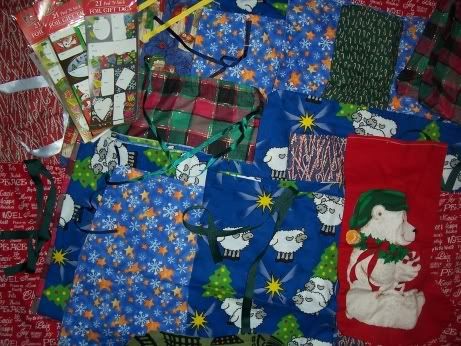
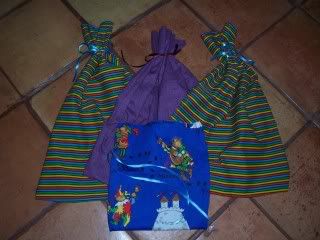
These are so cool that people starting pre-ordering them from my youngest. (8 years old @ the time). He turned a very nice (and well earned) profit that Christmas! And we had some great built in math, business and economics lessons.

Here are the details:
We limit ourselves to the $1.00 a yar
d fabric.
You can get 2 to 4 small to medium size bags from a yard, so that makes these bags more affordable than even the least expensive purchased gift bags!


Ribbon closes the bags. Spools @ Michaels are ~ 3 for $1.00 (on sale) and the spools last a long time!

We have ~ 40 bags that we use year after year @ Christmas .
( 10 per person. Our kids definitely don't get 10 gifts per year, but this allows plenty of different sizes to be used as needed.)
Another bonus of using fabric gift bags for Christmas is that all the gifts can be wrapped in about 30 minutes!

Store these bags flat so that they look like new everytime you use them (or have your trusty iron handy to spruce them up). We like to store them with some fragrant lavender or potpourri so that they smell wonderful.

We also use these for birthdays and gifts for friends. Sometimes friends are more excited about the fabric gift bag than anything else!


Here are the instructions:
  • Cut 2 equal size pieces of fabric and place right sides together. (Or, if you want the same design on each side, fold a longer piece of fabric in half - right sides together)
  • Cut a piece of ribbon long enough close the bag. (Approximately 24 inches for most bags.)
  • Fold the piece of ribbon in half and pin to the inside of the fabric about 3 inches from & parallel to the top. (At this point your ribbon will be on the inside of the bag laying parallel to the top of your bag.)
  • Sew all sides together except the top. Sew over the folded end of the ribbon. Be careful not to sew the opposite end of the ribbon into the other side seam.
  • Turn right side out.
  • Use pinking shears to cut the top so there is no need to hem. Note: Felt and flannel do not fray.
  • Easy, easy, easy . . . . So start having fun making bags! Re-use them. Say goodbye to wrapping paper waste (and expense).
cross posted @ A Catholic Notebook

Sunday, August 9, 2009

Back Tpack

Because most children wear backpacks the wrong way and suffer pain, bad posture and injuries, Salem physical therapist Marilyn Miller Von Foerster redesigned a new school bag, called the BackTpack.

The new backpack was tested on 40 middle school students who gave it favorable reviews. “It went from about 68 percent of students with pain to 12 percent, just with the given load,” said Miller Von Foerster. “I asked if they stand or walk differently and about 80 percent said I stand straighter.” Chiropractor David Duemling sells the BackTpack through his clinic and said it can really help people with bad backs and prevent problems in the future.
  • Eighth grader McKenna Clayton, one of Duemling’s patients, tried out the backpack. She suffers from sway back, or when her spine curves too far inward. “It’s always just really hard because I’m tipping backwards,” said Clayton. “It gets really sore and it’s very tough to carry a regular backpack.” Clayton originally thought the backpack looked and felt odd when she first put it on, but began to like it after wearing it for a few hours. “I loaded it up with books, my normal school load and it was a lot easier to carry around,” she said.

  • Jeff Thorne, another backpack tester, said he saw some advantages to the design. “If you’re riding the bus, you don’t have to take it off and put it on the floor,” he said. “You can leave it on you [and] you can know it’s secure on you.” Though his back felt better, Thorne said the bag wasn’t practical to fit odd items like shoes and clothing.

Miller Von Foerester has sold about 3,000 of the bags to people around the world. Though she’s not making a profit yet, she said she wants to help people feel better one back at a time.

sourcing - H/T to Bethany Thompson for the heads up on this!

Article quoted in full from: KATU.com

Graphics from Back Tpack website

Thursday, May 29, 2008

Scavenger Hunt & Postcards

What cool ideas.
H/T and a big TU to Bia over at La Dolce Vita. This is a copy and paste straight from her blog - fabulous blog btw!


I wanted to share two great ideas for children during a family vacation:

The Scavenger Hunt

Two years ago my husband and I took our boys on their first trip to Italy. Because I wanted this trip to be both memorable and educational, I prepared a scavenger hunt highlighting some of the things I knew we would be seeing. The night before the trip I gave them each a list of 25 items to look for and a disposable camera. Some of the items on the list were obvious: someone eating a gelato; a tower that leans; a square with a fountain in the middle; a sign written in Italian; a vespa. Some weren't so obvious: a lion carved in stone (lion: symbol of Venice and found everywhere in that city); a love letter to Juliet (the wall near Juliet's balcony is plastered with love letters asking for advice).

They loved the scavenger hunt and took it very seriously. Once we returned home they put their list and their photos in a small album . . . a wonderful memento of our trip.


Postcard Journals

On this same family trip, I wanted the boys to record in some way what they were seeing and learning. I knew, however, that a traditional journal was just not the way to go. Instead, the boys sent postcards . . . to themselves!! After a day spent sightseeing the boys would select a postcard and write some highlights of the day. A postcard was perfect because they had a picture of what they saw, and the limited space on the back kept their journaling down to a few sentences.

The best part was that a few days after returning home the postcards started arriving, and the boys would get so excited to receive mail. Their postcards were also incredibly funny:

Dear Me: This postcard shows the day when we went to Collodi . . . a park all about Pinocchio. When I saw the spitting whale, monstro, my eyeballs were popping out of my ears. Dear Wonderful Self: I went to Poppi and saw Poppi castle. I saw everything from a model of a medieval guy on a battlefield with his guts spilling out, to a real skeleton in the dungeon. This was awesome!

Dear Me: I went to Cortona today. It was so high on the mountain my ears had trouble getting used to the altitude. We sat on the steps pictured on the postcard and ate a panino. The pigeons practically attacked us when I threw a chip on the step. Dear Me: Today we went to La Verna, a Franciscan monastery. We saw the real cloak that St. Francis wore. My favorite was, of course, the gift shop!! (My middle son mentions a gift shop in every. single. postcard.)

Dear Cool Kid (aka me): In Verona I saw a Colosseum and the Piazza Bra - a bra that looks like a pizza. Not really. Anyway I saw Juliet's balcony with all the love letters attached to the wall. By the way, the Piazza Bra is a square named Bra.


Well, I hope this gives you some ideas for a memorable family vacation. Happy summer and safe travels to you!

Thursday, May 22, 2008

The Tickle Me Plant

Sensitive plant pic: Let your children explore nature in the house with these sensitive plants and seeds.

Just in case you have not met, I would like to introduce you to the Tickle Me Plant.

The Best Nest carries these amazing seeds and plants. So come on by!

What's so special about this plant? The leaves react to your touch. Touch the leaves and they will fold together for a time and eventually reopen. Perfect for you and your young gardeners in training!

You can find more information about these plants at Wikipedia


Thursday, February 21, 2008

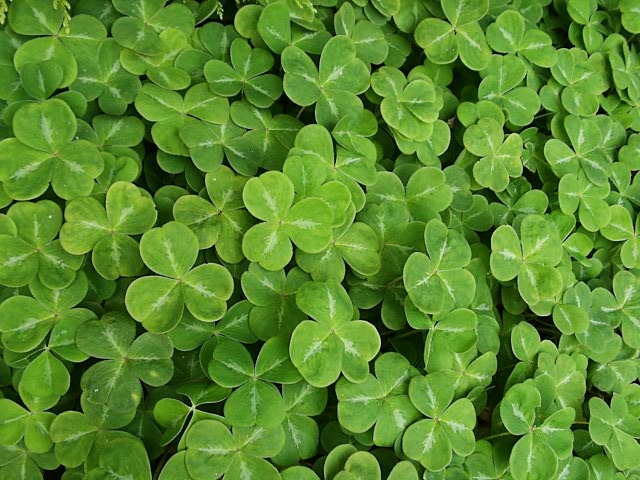
St. Patrick's Day Shakes (green as shamrocks)

Super, simple and fairly healthy!
~2 cups vanilla ice cream or frozen yogurt
~1 & 1/4 cups milk (any kind!)
~1/4 teaspoon mint extract (optional)
~8 drops green food coloring
~1 scoop Melaleuca Protein Powder
green sprinkles

Blend all ingredients (except green sprinkles) on ~high speed until smooth. Add those sprinkles!


Monday, October 29, 2007

Fast Food, Obesity's Biggest Culprit

Trend in Fast food Obesity: The Center for Health and Health Care in Schools reports dramatic increase in consumption of fast food by children since 1970. Presently, children get 10 percent of their total energy intake from fast foods, compared to 2 percent in the 1970s.

Since fast food adds 6 pounds per child per year and 33% of the children and teens in the US consume fast food, obesity is on the rise.

Fast food obesity
Fast food obesity

Occurrence of Fast food Obesity: According to a report published in Chicago Tribune, fast-food consumption is more in higher-income households, young boys, older children, African-Americans and children living in the south, whereas fast food consumption is found to be low in youngsters living in the West, rural areas, Hispanics, white women and those aged 4 to 8. Due to the increase in the number of fast food outlets, fast food prevails in virtually every segment of the society, including hospitals and schools, as per a study on fast food & obesity by Harvard School of Public Health.

Relation of fast food to obesity: Fast foods compromise the quality of diet by replacing more healthy foods. Fast foods are known for having high content of saturated and trans-fat, low content of fiber and massive portion sizes, leading to obesity.

Managing Fast food Obesity:
The onus lies on parents to educate their children about the ill effects of fast food. Obesity can be prevented in children by allowing fast food in moderation only. Also, both, the big and small fast food players should educate people about the contents of their products.

Tuesday, July 17, 2007

Kids Hazardous Waste Page

Many of the products used around the home, such as paints, cleaners, and pesticides, are dangerous and poisonous.

These products are not only dangerous in the house, but if they are not disposed of correctly, they can cause pollution and harm fish, wildlife, and people.

Kids Hazardous Waste Page teaches readers how to handle and dispose of household hazards safely. Although this is a "kid's page" it is a great reference page for parents, teachers, grandparents, sisters and brothers (you get the idea!)

There are also games, quizzes and resources for lots more info (a teacher goldmine!)


Tuesday, July 3, 2007

Home Fireworks

This is from Ken Levine's blog -- I could not figure out how to say it better or even differently so it is a complete cut and paste. He is a good writer. You can check out his blog here.

OK, OK, so I edited a teeny bit but it is mostly his!

You should definitely check out the link at the bottom of the post if you are:

1) still thinking that home fireworks are probably ok

2) one of my neighbors who is planning on setting off fireworks in our neighborhood

3) the lady that I spoke to last night who works at The Waffle House and owns 2 fireworks stands


Here, finanlly, is THE POST!
Why the heck do people buy home fireworks?

How many fingers and eyebrows do they have to lose?
How many trailer parks have to burn down before they learn?

What parent (i.e.: a responsible person with children) in his right mind would set off something called a 12 inch “strike force missile”? Or a “Mad Dog”, “Bazooka Bear”, “Titanium Cracker”, “Dragon’s Wrath”, “Big Mama Jama”, “Brutal Force”,“Nuke Power”, “Pull String Grenade”, “Assorted Color Ammo Smoke”, “Caliber Blast”, “Car Bomb”, “Big Earthquake”, “Jumboshell Fountain”, “Pyrogyro”, “Cracker Jack in a Box”, “Deadly Fire”, “Battle of New Orleans”, “Pay Back”, “Mucho Grande – small” (isn’t that an oxymoron?), “Air Raid”, or of course the ever popular “So X*@! Good”?


Explain to me where or how these are “safe and SANE”.
______________________________________

comment from me: You go, Ken!

Quite a few others' comments followed - here are a couple:
Blog Widget by LinkWithin